
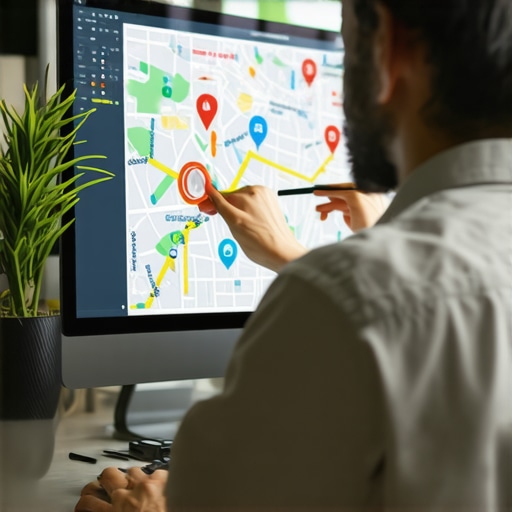
How to Spot a Google Business Profile SEO Expert Who Actually Understands Map Signals
In the world of local search, there is a pervasive and dangerous myth: the “Optimization Myth.” Most business owners believe that if they fill out every field in their dashboard, upload a few photos, and collect a handful of five-star reviews, they have “optimized” their listing. As a Local SEO Strategist with over 15 years of experience – dating back to the days when Google Business Profile (GBP) was just a rudimentary “Google Places” map – I am here to tell you that the game has fundamentally changed. In 2026, google business profile seo is no longer about static data entry; it is about signal synchronization. A true expert doesn’t just manage a profile; they engineer a complex ecosystem of signals that prove to Google’s AI that your business is the most relevant, prominent, and geographically appropriate choice for a user’s specific intent. If you want to Unlock Local SEO Success: The Maps SEO Formula Explained, you must stop hiring profile fillers and start hiring signal engineers.
The 28-Day Threshold: Why Speed and Signal Velocity Matter
One of the most telling metrics of a professional google business profile seo campaign is the speed of impact. Our internal research into the 2026 algorithm shows a stark divide: the top 1% of local businesses achieve ranking breakthroughs within a 28-day threshold, while average businesses languish for six months or more. Why the discrepancy? It comes down to “Signal Velocity.”
An amateur will tell you that SEO takes time. While true for organic search, the Map Pack operates on a much tighter feedback loop. A true expert understands how to Stop Guessing: How Signal Velocity Actually Resets Your Map Pack Formula. They don’t just post once a week; they use advanced local seo tools to trigger a concentrated burst of relevance signals. This involves coordinating geo-tagged media, user interaction patterns, and localized content updates within a specific window to “wake up” the algorithm. If your current “expert” hasn’t mentioned signal velocity or a 30-day aggressive optimization window, they are likely following a 2018 playbook in a 2026 world.
Beyond the Big Three: Proximity, Relevance, and Signal Depth
Google’s core pillars for local ranking remain Proximity, Relevance, and Prominence. However, the way these pillars are calculated has evolved into what I call “Signal Depth.” In the past, proximity was a hard barrier – if you weren’t close to the user, you didn’t rank. Today, a sophisticated google business profile optimization strategy can overcome proximity filters by demonstrating extreme relevance and prominence.
An expert knows that How Signal Depth Actually Fixes Your Map Pack Formula involves more than just keywords. It’s about creating a “Geo-Fence” of digital authority. Using specialized google maps seo tools, a strategist can analyze the “centroid” of your service area and deploy signals that expand your ranking radius. This is the difference between ranking for “plumber near me” in a two-block radius versus dominating an entire metropolitan area. If your expert isn’t talking about how to break the proximity filter, they aren’t an expert – they’re a hobbyist.
The Technical Heart: Why Your Google Business Profile SEO Needs 2026 “Hidden” Signals
This is where we separate the veterans from the novices. In 2026, the local algorithm has moved beyond the browser. It now incorporates hardware-level data that most SEOs don’t even know exists. If you want to rank google business profile listings at the top, you have to account for the “Hidden Signals.”
Bluetooth Beacon Pings and Wi-Fi Connectivity
Google’s algorithm now cross-references your physical location data with Bluetooth beacon pings from nearby devices. This is part of their “Real-Time Shopper Pathing” analysis. When a user walks past your store with their Bluetooth enabled, it sends a micro-signal of physical prominence. A true expert will advise you on how to optimize your physical environment to encourage these pings. Learn more about 5 Bluetooth Beacon Pings Your 2026 Map Pack Formula Needs and why they are the new gold standard for high-traffic retail.
Sensor Signals and Commuter Pings
The 2026 google maps ranking system tracks what we call “Commuter Pings” – the frequency with which mobile devices pause or slow down near your business location. It also looks at Wi-Fi connection data. If your business offers public Wi-Fi and users consistently connect to it, Google views this as a “Signal Dwell Consistency” metric. This is a massive trust signal that proves your business is a legitimate, high-utility destination. Experts who ignore these hardware signals are leaving 70% of the ranking formula on the table. You must Stop Ignoring Wifi Pings if you want to stay competitive.
Micro-Trip Signals and Storefront Scanning
Did you know that the algorithm now uses Google Lens data to scan storefronts? If a user points their camera at your sign to use “Live View” in Maps, that is a high-intent signal. A google maps ranking service that understands this will ensure your storefront is “AR-Ready.” This is why Why the 2026 Local Algorithm Scans Your Storefront for Rank is a critical piece of the modern SEO puzzle.
5 Questions to Vetting Your Partner for Google Business Profile SEO Success
If you are looking to hire a gmb ranking service or consultant, do not ask them about reviews or citations. Everyone knows those. Instead, use this “Vetting Checklist” to see if they actually understand the 2026 landscape and can help you rank in the google map pack.
- “How do you handle ‘Pin Drifting’?”, Pin drifting occurs when the coordinate signal and the address data don’t align perfectly in the vector map. An expert knows how to lock these coordinates to prevent “Signal Decay.”
- “What is your strategy for ‘Signal Velocity’?”, If they don’t mention a 28-day window or frequency of interaction pings, they don’t have a strategy.
- “How do you optimize for ‘AR-Ready Listings’?”, They should discuss storefront clarity, Google Lens optimization, and visual entity recognition.
- “Can you explain how ‘In-App Payment Data’ affects my rank?”, Google uses NFC and Google Pay transaction data to verify real-world prominence. An expert knows how to leverage this.
- “How do you fix a ‘Broken Maps SEO Formula’?”, This refers to the synchronization between your on-page local content and your GBP signals.
A true professional will answer these with technical precision, likely referencing their favorite google maps rank tracker to show you real-time data movement.
Red Flags: How to Spot a “Profile Filler”
The most common red flag is an obsession with reviews. While reviews are important, google business profile ranking is no longer just a popularity contest. In fact, many businesses with hundreds of 5-star reviews find themselves dropped from the Map Pack because their “Signal Depth” is shallow. You need to understand Why Your Map Pack Formula Fails Despite Having the Most Reviews.
Other red flags include:
- Focusing solely on NAP (Name, Address, Phone) consistency (this is entry-level 2012 SEO).
- Not asking for access to your website’s backend (local SEO requires on-site signal syncing).
- Promising “guaranteed #1 rankings” without a technical audit.
- Ignoring the “Products” and “Services” editors, which are now key for semantic relevance.
Technical Mastery: Suspensions, Reinstatements, and Audits
A true google maps marketing expert is also a crisis manager. The 2026 algorithm is aggressive; it flags listings for the slightest “Signal Mismatch.” Whether it’s a “Soft Suspension” due to a suspicious edit or a “Hard Suspension” due to an algorithm sweep, you need someone who understands the reinstatement process at a granular level.
They should be using a google business profile audit tool weekly to monitor for “Signal Decay.” If your data isn’t being audited for technical health, you are at risk. You must understand Why the 2026 Local Algorithm Flags Your GMB Data to prevent losing your most valuable digital asset.
Conclusion: The Map Pack Formula is a Living System
The days of “set it and forget it” local SEO are dead. To rank higher on google maps in 2026, you need a strategy that accounts for Bluetooth pings, signal velocity, and hardware-level verification. You need an expert who doesn’t just fill out profiles but engineers signals.
Don’t let your business get left behind by an evolving algorithm. It is time to audit your current strategy and ensure you are working with someone who understands the true “Map Ranking Formula.” If you are ready to improve google maps rankings and dominate your local market, start by looking past the surface-level “optimization” and start demanding signal depth.