
Stop Using Generic Local SEO Tools That Hide Your Real Map Position
You’re sitting at your desk, you open Google, and you type in your primary service. There you are – Number 1 in the Map Pack. You pull up your monthly report from your expensive agency, and it confirms the win: a big, green “1” next to your top keywords. Yet, the phone isn’t ringing. The leads have dried up, and your “dominance” feels like a ghost town. As a Google Business Profile Product Expert, I see this every single day. The truth is, your google business profile seo strategy is likely built on a foundation of lies provided by generic tracking tools.
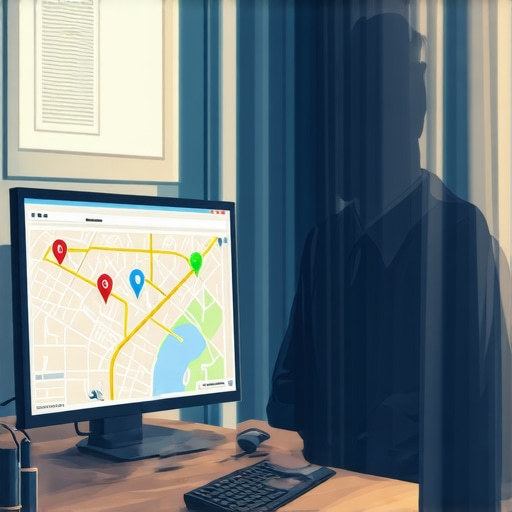
The “Proximity Lie” is the silent killer of local businesses. Traditional rank trackers give you a single data point, usually based on a static IP address or a broad zip code center. This is fundamentally flawed because, in the world of local search, rankings change every block you move. According to insights shared within the Reddit /r/localseo community, map pack tracking is notoriously unreliable because positions fluctuate based on real-time user location, and most tools update far too slowly to capture the reality of the street. If you aren’t seeing your ranking on a granular grid, you aren’t seeing your business at all.
The Vanity Metric Trap: Why “Rank #1” is a Local SEO Myth
In the current landscape of local seo ranking factors, proximity remains the undisputed king. However, generic tools exploit this by checking your rank from the most favorable position possible – often right on top of your business address. If you check your rank while sitting in your office chair, you will almost always appear at the top. This creates a dangerous “Vanity Metric Trap” that hides the fact that you are invisible to a customer just three blocks away.
Recent research from LocalDominator highlights a startling reality: tracking only a single point for Google Maps rankings creates a false sense of security that leads to budget misallocation. A business might “Rank #1” at their front door but drop to position #12 once a potential lead crosses the main intersection into the next neighborhood. This is why your google maps ranking service must move beyond point-in-time tracking.
To truly understand your visibility, you must transition to grid-based tracking. This methodology measures your rank google business profile performance across a multi-point coordinate system (e.g., a 5×5 or 13×13 grid). Without this, you are effectively flying blind. You might be winning the battle for your parking lot while losing the war for the entire city. Understanding Why Your Local Visibility Hits a Hard Wall at the Town Line is the first step in moving from vanity metrics to actual revenue.
2026 Signal Shift: What Your Current GMB SEO Tools Are Missing
The algorithm has evolved far beyond the basic optimization of Name, Address, and Phone number (NAP). As we look toward the 2026 “Map Pack Formula,” the signals Google prioritizes have shifted toward physical verification and behavioral patterns. If your current gmb seo tools are only looking at keyword density and backlink counts, you are using a 2015 playbook for a 2026 game.
One of the most significant shifts involves what I call “Physical Pings.” The 2026 algorithm increasingly utilizes Bluetooth and Wi-Fi signals to verify a business’s physical presence and popularity. Google’s “Stop Ignoring Wifi Pings” update allows the search engine to cross-reference a user’s device data with the business’s router signals and beacon pings. This confirms that a business isn’t just a “ghost kitchen” or a virtual office, but a legitimate entity serving real humans. This is one of The Physical Proximity Signals Most Map Ranking Experts Forget to Check.
Furthermore, the algorithm now weights “Verified Foot Traffic” and “Cross-Device User Paths” more heavily than ever. If a user searches for a “dentist near me” on their desktop at work and then uses Google Maps to navigate to that office on their phone an hour later, that creates a high-authority trust signal. This multi-device journey validates the business’s relevance in a way a static review never could. The 2026 Map Ranking Formula isn’t just about what you say on your profile; it’s about the physical movement of the marketplace around you. To keep up, you need to understand The One Bluetooth Signal Your Map Pack Formula Is Missing to ensure your signals are reaching the algorithm correctly.
Visualizing the Truth: The Power of Street-Level Heatmaps
If a picture is worth a thousand words, a heatmap is worth a thousand spreadsheets. For any serious marketer, a visual heatmap is infinitely superior to a list of keywords. A list tells you that you are “Average Rank 4.2,” which sounds okay. A heatmap shows you that you are Rank 1 in the north and Rank 20 in the south because a competitor’s “Signal Radius” is pushing you out.
Technical discussions within leading Facebook Local SEO groups emphasize that “bonus points go to tools that show visual heatmaps at street-level.” This is because local search is hyper-local. A river, a highway, or even a large park can act as a “dead zone” for your signals. By using a high-quality google maps rank tracker, you can identify exactly where your visibility drops off. This allows you to stop guessing and start targeting your local ad spend and content strategy toward the specific neighborhoods where you are currently losing ground.
Visualizing these “dead zones” is the only way to improve google maps ranking effectively. When you can see the red dots on the map where you should be green, you can begin to diagnose the issue. Is it a lack of geo-tagged content? Is it a competitor with higher “Signal Velocity”? Or is it simply a proximity wall that requires a more aggressive Mastering GMB Rankings: Proven Strategies for 2025 approach?
How to Audit Your “Map Blind Spots”
To reclaim your territory, you need to perform a deep dive into your profile’s technical health. Using a professional google business profile audit tool is the most efficient way to expose the “Map Blind Spots” that generic trackers ignore. Here is a step-by-step checklist for a modern audit:
- Check for “Signal Drift”: Ensure your map pin is not just “close” but mathematically precise. Even a few meters of drift can cause you to lose out on “Near Me” searches in high-density areas.
- Analyze “Neighborhood Density Logic”: Google categorizes businesses based on the density of the surrounding area. If you are in a high-density urban core, your ranking radius will naturally be smaller. Your google maps ranking service needs to account for this density logic to set realistic KPIs.
- Evaluate Image Metadata for 2026: The 2026 GMB Ranking Formula now leverages AR-ready listings. Google’s AI scans storefront photos and interior 360-views to “verify” the services you claim to offer. If your photos lack the proper metadata or visual cues, you are leaving ranking power on the table.
By identifying these gaps, you can understand Why Your Google Business Profile Isn’t Showing Up for Nearby Searches. An audit isn’t a one-time event; it’s a diagnostic necessity to ensure your google business profile seo is firing on all cylinders. You can learn more about this process by reading How a Deep Business Profile Audit Exposes Your Hidden Map Blind Spots.
Beyond Reviews: The “Map Ranking Formula” for Total Dominance
We’ve been told for a decade that reviews are the most important factor to rank higher on google maps. While reviews are essential for conversion, they are no longer the primary engine for ranking. In fact, many business owners are finding that “Why 5-Star Reviews Alone Are Failing to Generate New Appointments” is their new reality. The 2026 algorithm focuses on “Signal Velocity” and “Hyper-Local Hubs.”
Signal Velocity refers to the frequency and consistency of interactions with your profile. This includes how often people click to call, how many users ask for directions, and how frequently you update your “Google Updates” (formerly posts). Active Signal Velocity fixes a stale Map Pack Formula. If your profile sits dormant for weeks, Google assumes your business is less “active” than the competitor who posts three times a week and responds to every Q&A within an hour.
To achieve total dominance, you must also establish “Hyper-Local Hubs.” This involves creating content and gaining mentions from other local entities within your specific grid coordinates. Think of it as digital neighborhood networking. When local news sites, neighborhood blogs, and local directory pages all point to your google business profile seo assets, it creates a localized authority that is nearly impossible for a non-local competitor to break. This is the secret to a high-performing gmb ranking service.
Conclusion: Reclaiming Your Local Market
The era of the “single-number” rank report is over. If you are still relying on generic local seo tools that don’t offer grid-based visualization, you are essentially flying a plane without a radar. You might think you’re at 30,000 feet, but the ground is much closer than you realize. To dominate the 2026 Map Pack, you must embrace the technical reality of proximity, signal velocity, and physical verification.
Stop falling for vanity metrics and start looking at the street-level truth. By using advanced local seo ranking tools that provide real-time, grid-based data, you can finally see the “dead zones” and eliminate them. It’s time to stop guessing and start growing. If you’re ready to move beyond the basics, contact me, Kevin Pauls, for a custom “Map Ranking Formula” strategy tailored to your specific service area. Your real position is waiting to be discovered.