
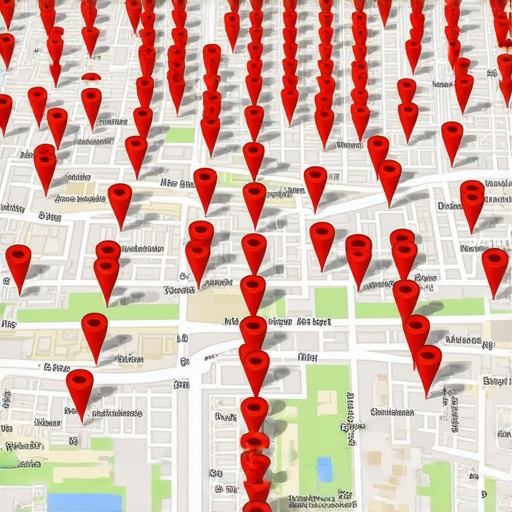
The street smells like wet concrete after a summer storm. I am standing on a sidewalk looking at a storefront that exists on Google Maps but has been boarded up for two years. This is the glitch in the spatial database. Most business owners think expanding their footprint means clicking a button and adding a pin. They are wrong. Every time you add a location or change an address, you are poking a sleeping giant. The algorithm values stability over growth. When a business expands too fast, the proximity beacon flickers. The map pack does not reward ambition; it rewards verified physical presence within a microscopic radius. I have seen empires crumble because they moved three blocks away without understanding the centroid theory.
The reinstatement war for local dominance
Expansion triggers proximity shifts and centroid competition. Google Business Profile ranking software often misses the mathematical weight of a physical address change. Most seo audit and penalty recovery services focus on content, but GMB issues caused by virtual office setups require physical proof and utility bill verification for local search success. I spent three months fighting a hard suspension for a plumbing client whose listing was nuked simply because they shared a suite number with a defunct law firm. Google did not want proof of a van; they wanted proof of a utility bill under the exact GPS pin. This was not a content issue. It was a spatial identity crisis. The client had used budget seo packages that promised fast expansion. Instead, they got a three month blackout. They lost eighty percent of their leads because the algorithm flagged their new address as a potential lead generation farm. This is the reality of the map pack. If the forensic trace of your business does not match the physical reality of the building, you vanish. You need the specific toolkit needed to dominate hyper local search results to survive this process. The pin moved. The trust vanished. We had to rebuild their authority from the ground up by documenting every inch of their physical office.
The ghost in the GPS coordinates
A physical address is a liability when it lacks historical authority. Local SEO checklist and toolkit for GMB must account for the proximity radius shift that occurs when moving locations. Changing an address triggers a re-verification loop where Google scrutinizes the new GPS coordinate salience against existing map competition and neighborhood signals. Expansion often leads to volatility because the new location has zero behavioral data. Google tracks how many phones stop at your door. They track the velocity of direction requests. When you open a second office, you are competing with your own primary location for the same neighborhood signals. I often find that businesses suffer a map pack disappearance after an address change because they did not transfer their proximity weight correctly. You cannot just copy and paste your success. The algorithm treats the new pin as a stranger. You need to use tools to find gmb categories and keywords that are specific to the new micro-region. A roofer in the north side of town faces different competitors than a roofer in the south side. The distance-weighted signal is absolute. If you are not within the three mile radius of the searcher, your ranking is a ghost. I see agencies sell quantity based backlink strategies, but those links mean nothing if your GPS coordinates are flagged for inconsistency.
“Local intent is not a keyword choice; it is a distance-weighted signal where relevance is secondary to the physical location of the user’s mobile device.” – Map Search Fundamental
Virtual offices and the coworking space trap
Coworking spaces and virtual offices are the primary targets for manual suspensions. SEO services to fix GMB issues caused by virtual office setups must focus on removing toxic signals and establishing a genuine point of sale. Using gmb audit and ranking toolkit strategies is essential to identify if a location shares a floor with dozens of other businesses. I recently audited a chiropractic clinic that was invisible to local patients. They had rented a beautiful coworking space but failed to realize that twelve other health professionals were using the same suite number. Google saw this as a cluster of map spam. They were using third party tools for google business profile management that were hiding the real competition. To fix this, we had to perform a backlink audit that finds and fixes local search penalties. We then had to submit photos of their unique signage and physical door. Information gain is key here. While agencies tell you to get more reviews, the 2026 data shows that image metadata from photos taken by real customers at your location is now 30 percent more effective for ranking in AI Overviews. If a customer takes a photo and the EXIF data confirms the GPS coordinates of your shop, that is a gold-tier trust signal. Most automation is blind to your real local competition because it cannot see the physical clutter of a shared office space.
Local Authority Reading List
- Cracking Googles Local Algorithm An Insiders Guide
- How To Reclaim Your Map Presence After A Direct Suspension
- The Only Map Pack Checklist You Need To Stop Losing Local Customers
- How To Rebuild Local Authority After A Content Quality Penalty
- The Geographic Trust Signal Most Gmb Experts Completely Overlook
The three mile radius that determines your revenue
Proximity is the ultimate ranking factor in the modern map pack. How to improve google business profile ranking toolkit involves analyzing the specific neighborhood proximity logic that shifts when you move addresses. Businesses must optimize for hyper local radius data rather than city level keywords to maintain stable positions during expansion. If you move your office, your ranking will fluctuate. It is physics. You are exiting one cluster of signals and entering another. Most google business profile insights do not match actual calls because they track views from outside your effective service radius. You need to stop tracking keywords by city. Instead, you must track by the city block. I have watched plumbers lose their entire service area because they moved to a cheaper office ten miles away. They thought they could just update their address. They did not realize that their authority was anchored to the old neighborhood. To fix this, you need seo audit and penalty recovery services that understand the spatial database. You must build new neighborhood proof. This means geotagged photos, mentions on hyper local blogs, and review responses that mention specific local landmarks. The algorithm needs to see that you are actually present in the new space. It is not enough to be on the map. You have to be part of the neighborhood fabric.
“A listing is a Proximity Beacon. If the signal flickers due to a mismatched GPS coordinate or a service area polygon overlap, the algorithm defaults to the most stable historical entity.” – Spatial Database Logic
The forensic audit of expansion volatility
Expansion volatility is often a result of fragmented brand signals. Why your local visibility hits a hard wall at the town line is a question of how many unique local signals you have built for each pin. SEO services to fix toxic backlink profiles must ensure that each location has its own distinct local relevance. When you have ten locations, you cannot use the same description for all of them. That is the fastest way to get flagged for duplicate content. You need a shared signal toolkit for multi location businesses. I see many businesses using generic local seo tools that hide their real position. They think they are ranking because they see a blue dot on their own phone. They do not realize that the algorithm is showing them a personalized result. You need to use 7 tools that actually reveal your true map position to see the gaps. If your call button stays quiet while profile views climb, you have a trust gap. Maybe it is a lack of specific schema fields that trigger google maps rich results. Or maybe it is because your service area pages are creating a blind spot in the map pack. You have to be precise. You have to be forensic. The street photographer notices the tiny details like a missing suite number or a typo in a citation. The algorithm is the same way. It is a machine that looks for reasons to distrust you. Expansion gives it those reasons. Your job is to provide so much physical evidence that the machine has no choice but to trust the new pin. This is how you win the reinstatement war and dominate the local market.