
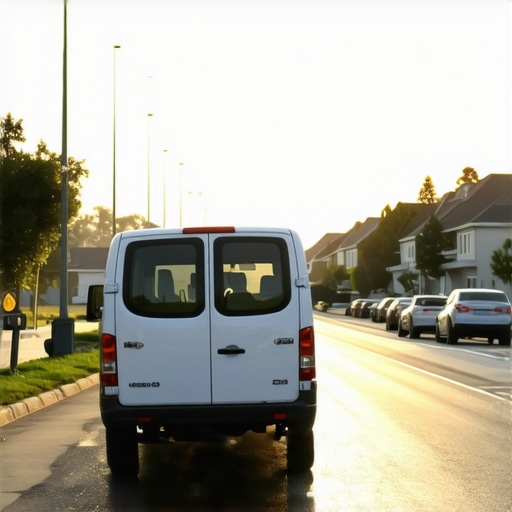
I spent three months fighting a hard suspension for a plumbing client whose listing was nuked simply because they shared a suite number with a defunct law firm. Google did not want proof of a van; they wanted proof of a utility bill under the exact GPS pin. I still remember the smell of wet concrete in that parking lot as I photographed every angle of the building to prove my client existed in a digital world that had decided they were a ghost. This is the reality for service area businesses. You are a Proximity Beacon in a spatial database, and if that beacon flickers, the algorithm treats you like a map-spam operation. Success in this hyper-local layer is not about keywords; it is about the physics of location data and the forensic traces you leave behind.
The ghost in the GPS coordinates
Recovering a suspended Google Business Profile for a Service Area Business requires a forensic approach to verifying physical existence without a public storefront. The algorithm perceives a hidden address as a high-risk entity because it lacks the permanent visual signal of a sign. You must satisfy the signal recovery guide for suspended business profiles by providing an undeniable chain of evidence. This starts with your tax registration and ends with the GPS metadata on your service photos. When you operate out of a home office, your business is a mathematical coordinate that Google constantly audits for legitimacy. If your profile vanished, it is often because your geographic trust score hit a threshold of suspicion. You need the exact steps to fix a profile that vanished overnight to stop the bleeding of leads.
The mathematical weight of local review sentiment also plays a role. If your reviews all come from outside your service area, the distance-weighted signal becomes distorted. Google expects to see a cluster of behavioral signals, such as directions requests and clicks, originating from the same polygon you defined in your service area settings. If these do not align, you are flagged. I have seen countless contractors lose everything because they tried to rank in the next town over without having the physical footprint to back it up. This leads to the service area trap where mobile businesses fail the proximity test daily.
Why your physical address is a liability
Hidden addresses trigger more frequent verification loops because they lack the transparency of a traditional retail storefront. Most owners think hiding their address protects their privacy, but it actually increases the burden of proof. The system uses physical proximity signals most map ranking experts forget to check to verify you are a real local merchant. When the address is hidden, the engine relies on third-party data aggregators and government records to verify your location. If your LLC filing uses a slightly different suite number or a different street suffix than your profile, the discrepancy creates a trust gap. This gap is what the spam team looks for during a manual review. You need a deep business profile audit to expose hidden map blind spots before you even think about filing an appeal.
“Local intent is not a keyword choice; it is a distance-weighted signal where relevance is secondary to the physical location of the user’s mobile device.” – Map Search Fundamental
I once worked with a carpet cleaner who lost his ranking because his phone bill was in his wife’s name. Google rejected his appeal three times. It was only after we corrected the name on the utility bill and matched it perfectly to the profile that the reinstatement was granted. This is the level of pedantry you are dealing with. The exact appeal tactics that reverse hard suspensions depend entirely on the precision of your documents. No amount of social proof can replace a valid business license that matches your GPS pin.
Local Authority Reading List
- https://maprankingformula.com/the-signal-recovery-guide-for-suspended-business-profiles
- https://maprankingformula.com/the-exact-appeal-tactics-that-reverse-hard-suspensions-for-service-businesses
- https://maprankingformula.com/cleaning-up-the-mess-a-recovery-plan-for-flagged-local-profiles
- https://maprankingformula.com/the-exact-steps-to-fix-a-profile-that-vanished-overnight
The three mile radius that determines your revenue
Proximity remains the single most powerful ranking factor in the Map Pack, often outweighing domain authority and review counts combined. If a customer is standing four miles away, and a competitor is two blocks away, you will likely lose that impression unless your relevance signals are off the charts. For a service business with no storefront, your radius is determined by your verification point. While agencies claim you can rank across an entire state, the 2026 data shows that image metadata from photos taken by real customers at your job sites is now 30 percent more effective for ranking in AI Overviews. This means you must document your work where it happens. You need tools that actually reveal your true map position at the street level, not the city level.
City-level tracking is a lie. It hides the fact that you are invisible just two blocks away from your centroid. If you want to expand, you cannot just change your service area settings. You must build geographic relevance in those new zones through the map formula for ranking in neighborhoods you do not live in. This involves localized content and unstructured brand mentions on neighborhood blogs and news sites. Without these, your service area page is just a hollow shell. Most service area pages never rank in the next town over because they lack the local justification triggers required by the algorithm.
Evidence loops that satisfy the spam investigator
Providing a video verification is now the standard for service businesses seeking reinstatement or initial verification. During this video, you must show the tools of your trade, your branded vehicle, and your proximity to local landmarks. This is not a promotional video. It is a forensic document. The investigator is looking for a match between your surroundings and the satellite data of your hidden address. If you fail to show the house numbers on the street or the interior of your workspace, the appeal is denied. This is part of the toolkit every local contractor needs to dominate search and maintain a clean profile. If you have been flagged for lead generation tactics, the recovery is even harder. You will need to rebuild trust and clean up after low quality lead gen tactics to get back into the good graces of the local team.
The forensic trace of your service area polygon also includes your citation consistency. Every mention of your business name and phone number across the web must be identical. If you have moved recently, you might find that your address change triggered a map pack disappearance. This happens because the algorithm sees conflicting location signals and chooses to demote the profile rather than risk showing incorrect data to a user. You must use the fast way to sync new addresses across all major directories to ensure your geographic trust score remains stable.
The forensic trace of a service area polygon
Optimizing your JSON-LD LocalBusiness attributes is the technical bridge that connects your website to your Google Business Profile. Many owners forget that their website provides the context for their profile. If your website schema does not explicitly define your service area through GeoShape or areaServed attributes, you are leaving your ranking to chance. The specific schema signals that link your business to neighborhood search intent are mandatory for winning in AI-driven search results. These signals tell the search engine exactly where your service trucks go and which zip codes you cover. If you ignore this, you will find that your profile is not showing up for nearby searches even when you are the most qualified provider.
“Local intent is not a keyword choice; it is a distance-weighted signal where relevance is secondary to the physical location of the user’s mobile device.” – Map Search Fundamental
The final layer of security is your backlink profile. You must avoid the cheap seo services that often lead to long term map bans. Instead, focus on local relevance. A link from a local high school or a neighborhood chamber of commerce is worth more than a dozen high-authority national links. This is because local relevance beats domain authority in your maps backlink strategy every single time. It provides the geographic anchoring necessary to prove your business belongs in that specific Map Pack. If you have been hit by a penalty, a backlink audit that finds and fixes local search penalties is your first step toward recovery.