
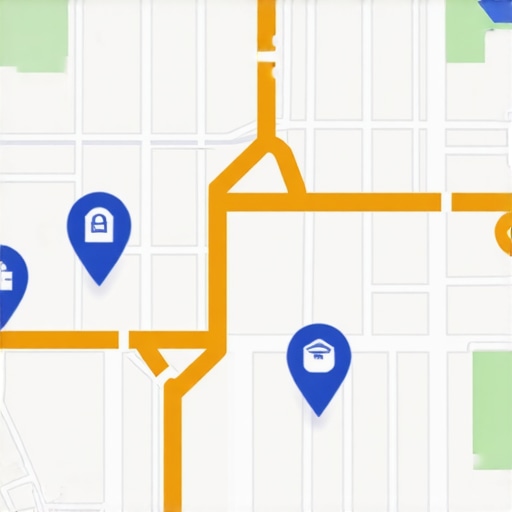
The Service Area Strategy: Ranking in Nearby Towns Without a Physical Office
You’ve seen it happen. You’re ranking #1 in your home zip code, but the moment you cross the town line, your business vanishes from the local map pack. It’s what I call the “Town Line Wall.” For many service-based businesses – plumbers, roofers, HVAC technicians, and even traveling lawyers – this geographic barrier feels like an invisible ceiling on their growth. They assume that because they don’t have a physical storefront in the next town over, Google will never let them play in that sandbox.
I’m Shahid Anwar, and I’ve spent years deconstructing the local algorithm to prove that this assumption is dead wrong. A physical office isn’t the primary requirement for local dominance; geographic relevance is. In this guide, we are going to dive deep into google business profile seo specifically for Service Area Businesses (SABs). We will explore how to break through the proximity barrier and capture leads in every suburb you serve, without ever signing a commercial lease in those areas. If you want to stop being a “local hero” in just one zip code and start dominating your entire region, this strategy is your blueprint.
The Proximity Myth: Why You Don’t Need a Storefront to Dominate
The most common misconception in the local search world is that proximity is an unbeatable ranking factor. While it is true that Google’s “Vicinity” update tightened the radius around a searcher, it did not eliminate the ability for Service Area Businesses to rank at a distance. The algorithm balances three pillars: Proximity, Relevance, and Prominence. When you lack proximity (because you don’t have an office in Town B), you must over-index on relevance and prominence to compensate.
Google explicitly allows for businesses that serve customers at their locations. In the Google Business Profile (GBP) dashboard, you have the option to hide your address and select “Service Areas.” Many entrepreneurs fear that hiding their address is a death sentence for rankings. On the contrary, if you are a mobile service provider, showing a residential address can actually hurt your trust signals. Google allows you to select up to 20 service areas. The “Proximity Myth” suggests that these selections are just labels, but in reality, they are the foundation of your geographic relevance. To rank google business profile listings effectively, you must understand that Google is looking for proof that you actually operate in those zones. You don’t need a storefront; you need a footprint.
Optimizing the Core: Google Business Profile SEO for SABs
Standard SEO doesn’t apply here. When you are an SAB, your google business profile seo efforts must be focused on category precision and service area definitions. The first step is choosing your Primary Category. This is the single most important piece of metadata in your profile. If you are a “Water Damage Restoration Service,” don’t just pick “Plumber” because it has more search volume. Be specific. Your secondary categories should then support the breadth of your services.
Next, let’s talk about the “Service Area” settings. Most business owners make the mistake of selecting entire states or huge counties. This dilutes your relevance. Instead, choose specific cities, suburbs, or even high-value zip codes. However, simply checking a box in the dashboard isn’t enough to improve google maps ranking. You need to back it up with data. I highly recommend using a google business profile audit tool from seovipertools.com to identify if your current profile setup has technical gaps that are preventing Google from trusting your service area claims.
One “insider” tip: Ensure your “Services” section is fully built out with custom descriptions for every single item you offer. Do not leave these blank. Use local keywords naturally within these descriptions to tell Google exactly what you do and where you do it. This is the first step in Mastering GMB Rankings: Proven Strategies for 2025.
The “City Page” Blueprint: Hyperlocal Content That Ranks
If your Google Business Profile is the “hook,” your website’s city pages are the “line and sinker.” To rank in a town where you don’t have an office, you must create a dedicated landing page for that specific location. But beware: Google is increasingly aggressive toward “thin” location pages that offer no value.
A high-ranking city page needs to be more than just a copy-paste of your homepage with the city name swapped out. To truly rank higher on google maps through organic association, your city page must include:
- Hyperlocal Testimonials: Reviews from customers specifically in that town. Mentions of local landmarks or neighborhood names within the review are gold.
- Local Project Photos: Upload photos of work you’ve done in that specific city. Use EXIF data or captions to denote the location.
- Neighborhood Mentions: Don’t just target “Atlanta.” Target “Buckhead,” “Old Fourth Ward,” and “Midtown.”
- Local Map Embeds: Embed a Google Map showing your service area for that specific town.
Many businesses fail because their pages look like templates. This is exactly Why Your Neighborhood Pages Are Ghost Towns and How to Fix the Traffic Gap. If you don’t provide unique value on these pages, Google will view them as “doorway pages” and filter them out of the search results entirely.
Advanced 2026 Signals: Beyond Citations and Keywords
As we move toward 2026, the local algorithm is becoming significantly more sophisticated. We are moving beyond simple citations (Name, Address, Phone) and into the era of “Signal Velocity” and “Commuter Pings.” Google is now using multi-device trust signals to verify if a business is actually active in the areas it claims to serve.
What does this mean for you? Google tracks the location history of mobile devices associated with your business. If your technicians are frequently in a specific town, and their phones (logged into the business’s Google accounts) are pinging off local WiFi networks and Bluetooth beacons, Google receives a “verified presence” signal. This is a massive ranking factor for SABs. We are also seeing Google utilize Bluetooth signal density and WiFi pings to confirm that a service provider is actually on-site.
If your team never actually enters the towns you claim to serve, your rankings will eventually stagnate due to a lack of “real-world” signals. This is part of the 7 Map Pack Formula Tweaks to Fix 2026 Proximity Signal Lag. You must align your digital claims with your physical movement. Encourage your team to check in or upload photos directly from the job site using the Google Maps app to reinforce these signals.
Building Authority Without a Local Address
How do you build “local juice” when you don’t have a commercial address in the target city? The answer lies in unstructured brand mentions and local authority building. Traditional citations on sites like Yelp and Yellow Pages are the bare minimum. To truly dominate service area business seo, you need to think bigger.
Seek out local sponsorships or partnerships in your target towns. Sponsoring a Little League team or a local charity event in “Town B” provides a high-quality local backlink and a brand mention that associates your business name with that specific geography. Furthermore, strive for “Unstructured Citations” – this is when your business is mentioned in a local news article or a community blog without a formal link. Google’s AI is smart enough to connect those dots.
I suggest using local seo software at seovipertools.com to track your “Share of Voice” in these nearby towns. This will help you see if your authority-building efforts are actually moving the needle in the map pack or if you’re still being out-muscled by local incumbents.
Common Pitfalls: The “Service Area Trap”
One of the biggest mistakes I see businesses make is trying to “cheat” the proximity factor by using virtual offices. Using a Regus, WeWork, or a UPS Store address is the fastest way to get your Google Business Profile suspended. Google’s AI and Street View cars are constantly scanning for storefronts. If they see a mail center where you claim to have a plumbing shop, you’re done. This is the core of The Service Area Trap: Why Your Mobile Business Is Failing the Proximity Test.
Another pitfall is the “Thin Content” trap. If you create 50 city pages that all have the exact same text, Google will only index one or two of them. This is The Hidden Reason Your Service Area Pages Never Rank in the Next Town Over. You cannot automate local relevance. It requires a manual touch – real photos, real stories, and real local data.
Conclusion & Action Plan
Dominating the local map pack without a physical office isn’t about “tricking” Google; it’s about providing overwhelming evidence of your relevance to that area. The “Service Area Strategy” requires a three-pronged approach:
- Profile Optimization: Maximize your google business profile seo by using precise categories and detailed service descriptions.
- Hyperlocal Landing Pages: Build unique, value-driven city pages that act as your digital storefront in every town you serve.
- Real-World Signals: Leverage mobile pings, job-site photos, and local sponsorships to prove to the 2026 algorithm that you are physically present in your service areas.
If you’re ready to scale, don’t just “add more cities” to your dashboard. Implement the full formula. Audit your current standing with a google maps ranking service and start building the geographic authority your business deserves. The “Town Line Wall” is only as high as you allow it to be. Break through it today.