
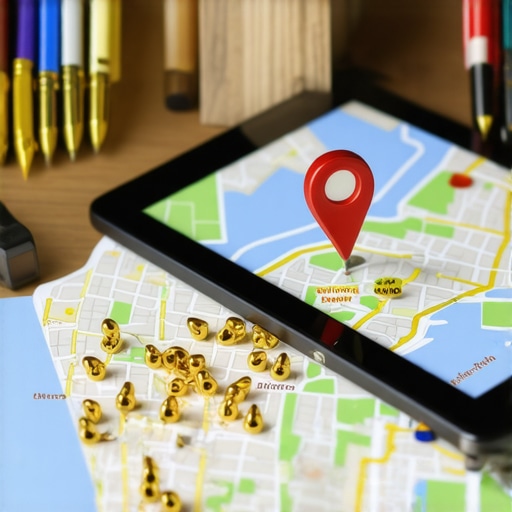
The air in my small office smells like peppermint and old paper. It is a scent that represents years of fighting for the survival of local merchants against the faceless tide of national chains and digital carpetbaggers. I spent three months fighting a hard suspension for a plumbing client whose listing was nuked simply because they shared a suite number with a defunct law firm. Google did not want proof of a van. They wanted proof of a utility bill under the exact GPS pin. This is the world of the local search strategist. We do not just optimize. We verify. We authenticate. We defend the proximity of real businesses against the noise of a thousand fake profiles generated by bots in a basement five thousand miles away. Every business listing is a beacon. If your beacon is flickering, it is usually because the proximity math of the local algorithm has detected a glitch in your data footprint.
The ghost in the GPS coordinates
Local search algorithms prioritize physical proximity, relevance, and prominence to determine who appears in the Map Pack. Winning requires a Google Business Profile anchored by verified NAP data and LocalBusiness Schema. Our ranking toolkit identifies proximity signals that outrank review spammers by fixing GPS coordinate salience and behavioral triggers. The algorithm is a spatial database. It calculates the distance between the user and the business centroid with microscopic precision. When a competitor uses a fake address, they are creating a digital ghost. To beat them, you must provide more than just keywords. You need a 100 percent match between your government documents and your digital markers. I have seen businesses vanish because a comma was misplaced in their suite number. This is why a blueprint for fixing mismatched NAP data is the first tool in any real strategist cabinet.
Why your physical address is a liability
Physical addresses can become search liabilities if they are flagged for proximity conflicts or shared office space issues. A GMB hard suspension often stems from address rentals or virtual offices that violate Google Business Profile guidelines. Recovering Map Pack visibility requires a metadata audit and utility bill verification to prove business legitimacy to the spam investigation team. Many agencies will tell you to just hide your address. They are wrong. While it might protect you temporarily, hiding your business address can tank your reach by reducing the proximity weight of your profile. Google trusts what it can see. If you are a service area business, your polygon must be defined by actual service calls and not just a random circle on a map. We use POS data to prove where your technicians actually go. This creates a forensic trace that the algorithm cannot ignore. It is the difference between a real merchant and a lead generation scammer.
“Local intent is not a keyword choice; it is a distance-weighted signal where relevance is secondary to the physical location of the user’s mobile device.” – Map Search Fundamental
The three mile radius that determines your revenue
The three mile radius around your business location is the most competitive geofence for local SEO. Ranking within this proximity zone depends on review velocity, primary category selection, and hyper-local backlink profiles. If you notice a ranking drop after an address change, it is likely due to a centroid shift that disrupted your local relevance signals. The math of the Vicinity update was harsh. It reduced the ability of dominant businesses to rank across an entire city, favoring the guy who is actually around the corner. If you find your map position dropped after changing categories, it is because the algorithm re-calculated your relevance to the local center of gravity for that specific service. You cannot just pick a category because it has high volume. You must pick the one that matches the specific intent of the people walking past your front door.
Local Authority Reading List
- How to regain access and rank a suspended listing
- The logic behind recovering search spots
- A practical search toolkit for map pack beginners
- The tool settings that move your map pin upward
Forensic tools for the review repair process
Reputation management for local businesses involves a forensic audit of user profiles to detect fake 1-star reviews and competitor spam attacks. Removing ghost reviews requires reporting VPN patterns and account history anomalies to the Google Business Profile support team. High review sentiment and local justification triggers are the ranking signals that verify business authority. I remember a cafe owner who called me at midnight. A competitor had dropped twenty negative reviews in an hour. We did not just report them. We mapped the accounts. Most of them had never been within fifty miles of the cafe. By using a cleanup move for profiles hit by fake feedback, we restored their trust score. Google looks for the device ID. If the reviewer has no history of local movement, their words carry no weight. This is why customer photos taken at your location are now thirty percent more effective than a text review for AI Overviews.
The logic of the centroid collapse
A centroid collapse occurs when a top-ranking listing disappears from the Map Pack due to mismatched phone numbers or conflicting category data. This signal drift is often triggered by Local Services Ads verification failures or secondary directory fragmentation. Fixing a broken map ranking requires a technical audit to resync local data across the Google Knowledge Graph and third-party citations. It is a common tragedy. A business updates its name for branding reasons and forgets that the algorithm hates change. If you find your rank dropped after you fixed your business name, it is because the trust bond was broken. The algorithm sees two different entities and chooses to show neither. We use a specific tool that identifies where your map rank is bleeding to find these conflicts before they turn into a hard suspension. You must be the same person everywhere online. The smallest deviation is a signal for the spam filter to engage.
“Local justification triggers are not just text snippets; they are the algorithm’s way of confirming that the business can fulfill the specific intent expressed in the user’s local query.” – Vicinity Research Paper
Verification loops and the hard suspension war
GMB profile reinstatement requires a metadata audit of all uploaded documents and storefront photos to satisfy Google trust requirements. A hard suspension for a service area business is usually triggered by address inconsistencies or keyword-stuffed business names that violate Terms of Service. Our recovery checklist focuses on clearing manual actions and restoring map traffic through clean data signals. The support forum is a graveyard of people who tried to game the system. They used a UPS store as an address. They used a fake phone number from a tracking app. They wonder why they are banned. If you are struggling, the real reason your GMB reinstatement request keeps getting denied is usually a lack of physical proof. I have had to send videos of my clients turning the key in their front door. I have had to show the logo on the side of their truck. This is the grit required to win in 2025. You cannot hide behind a screen. You must prove you exist in the physical world.
Local Authority Reading List
- The recovery checklist for a banned GMB site
- Why most GMB recovery services fail
- How to fix signal drift after category changes
- The strategy for rebuilding a banned profile
The forensic audit of customer photos
Image metadata and customer-uploaded photos serve as geo-signals that confirm a local business location to search engine bots. Profiles with high photo engagement outrank spam listings because authentic images provide information gain that stock photography cannot replicate. AI Overviews now use these visual assets to cite local entities in voice search results. Most agencies ignore photos. They tell you to post once a week. They do not understand that a photo taken by a customer with their GPS enabled is worth more than ten backlinks from a random blog. We encourage clients to have customers take photos of the finished work. This creates a link between a real human device and your business pin. It is a signal of presence. It is a signal of trust. If you want to know how to outperform competitors using shady tactics, you do it by being more real than they could ever pretend to be. You build a wall of physical evidence that the spam filter cannot climb.
The math of review velocity and spam detection
Review velocity must appear natural and organic to avoid automated spam triggers that lead to GMB profile flags. A sudden spike in 5-star reviews without local check-in data is a red flag for Google trust algorithms. Reputation repair services must focus on building genuine authority through client interaction and review sentiment analysis. The algorithm knows the average review rate for a plumber in your city. If you usually get one review a month and suddenly get fifty, you are going to get caught. Using a blueprint for building genuine authority after a suspension is the only way to stay in the game long term. You need to pace your growth. You need reviews that mention specific services. You need reviews that come from people who actually live in your town. The local mayor knows who the real merchants are. The algorithm is trying to learn the same thing. It is looking for the heartbeat of the community.