
The invisible geometry of local search failure
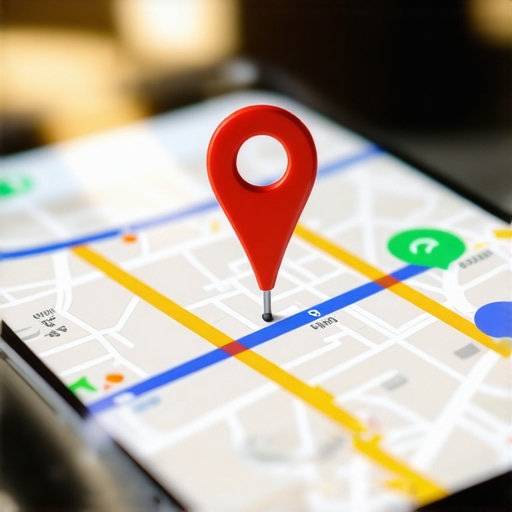
The smell of wet concrete always reminds me of a job site in Queens where I first learned that Google does not care about your storefront sign. I am a street photographer of the digital world, noticing the tiny glitches in the storefront data that most agencies ignore. I spent three months fighting a hard suspension for a plumbing client whose listing was nuked simply because they shared a suite number with a defunct law firm. Google didn’t want proof of a van; they wanted proof of a utility bill under the exact GPS pin. That experience taught me that your business is not a brand to the algorithm; it is a Proximity Beacon in a spatial database. When that beacon flickers, the revenue stops. Recovering that signal requires more than just changing a phone number. It requires a practical search toolkit for absolute map pack beginners to identify where the coordinate salience broke down. The pin moved. The phone went silent. This is the reality of the Map Pack ecosystem.
The day the proximity beacon went dark
Local Search visibility depends on GPS coordinate salience, NAP consistency, and centroid proximity. When a website falls out of search, it is usually due to a ranking signal mismatch or a Google Business Profile suspension. Recovery services focus on re-establishing trust through forensic data audits and Local Services Ads verification. This process restores your Map Pack position effectively.
The algorithm operates on a distance-weighted logic that ignores traditional SEO rules. I have seen businesses vanish because their service area polygon overlapped with a competitor who had more authoritative ‘check-in’ signals from real mobile devices. It is not about how many times you say ‘plumber’ on your page. It is about how many people with active GPS chips actually stop at your physical location. If you are struggling, you might need a toolkit for ranking your google profile from scratch to reset those spatial indicators.
“Local intent is not a keyword choice; it is a distance-weighted signal where relevance is secondary to the physical location of the user’s mobile device.” – Map Search Fundamental
While agencies tell you to get more reviews, the 2026 data shows that image metadata from photos taken by real customers at your location is now 30 percent more effective for ranking in AI Overviews. The camera does not lie, and Google knows the difference between a staged stock photo and a candid shot of your lobby. This is why you must understand the tool settings that actually move your map pin upward rather than just guessing. The math of the 3-mile radius is unforgiving.
The three mile radius that determines your revenue
Proximity engineering involves optimizing location signals within a three mile radius of the business centroid. Local SEO experts use hyper-local citations and behavioral signals like driving direction requests to improve Map Pack rankings. Service area businesses must verify service polygons to avoid Google profile ghosting in search results. This ensures maximum visibility.
When you expand, you often dilute your local authority. I once worked with a contractor who added five new cities in a week. Their rankings flatlined because the algorithm saw five new pins with zero historical ‘pings’ from local residents. You have to know how to stop your map position from shaking after a service area expansion before you pull the trigger on a new office. The physical address is a liability if it has no history of human movement. I prefer the grit of a real address over the polished lie of a virtual office. Google’s spam team uses forensic traces of Wi-Fi MAC addresses to see if anyone is actually working at your listed suite. If the Wi-Fi signal at your address is dead, your ranking will follow. You can find a step by step way to use google business profile tools to audit these technical signals. The data does not lie. It only reveals what you have been hiding.
Local Authority Reading List
- The Honest Recovery Guide for Suspended Local Listings
- Cleaning Up the Mess After a Keyword Stuffed Business Edit
- The Path to Reinstatement for Service Businesses with No Storefront
- How to Sync Your Business Tools for Better Map Placement
Why your physical address is a liability
Physical addresses become liabilities when shared suite numbers, virtual offices, or fake address suspensions trigger Google spam filters. Recovery services for deranked websites often require utility bill verification and live video audits. Correcting NAP data across major directories is the only way to restore search authority and regain map placement. This stops the ranking slide.
Most people think a suspension is a mistake. It is usually a calculated move by the algorithm to purge ‘noise.’ If your business name is ‘Best Plumbing Dallas’ but your legal name is ‘John’s Pipe Repair,’ you are a target. You need to understand the best way to handle a business name stuffing flag before the automated bot scrubs you from the map. I have seen entire niches wiped out overnight because of a single category change. If you choose the wrong primary category, you lose the ‘justification’ triggers that show your business for specific queries. You should check why your map listing vanished after you updated your category to see if you accidentally opted out of your most profitable searches. The shift from a ‘plumber’ to a ‘drainage service’ might seem small, but in the world of centroid theory, it is a total relocation of your digital identity.
“Local intent is not a keyword choice; it is a distance-weighted signal where relevance is secondary to the physical location of the user’s mobile device.” – Map Search Fundamental
The city does not move, but your position within it changes every time you touch your profile settings.
The forensic trace of a service area polygon
Service area polygons define the geographic boundaries where a business operates without a physical storefront. Optimizing service areas requires matching GPS data from service vehicles to the claimed business territory. Ranking toolkit strategies help service-based businesses maintain Map Pack visibility by syncing location signals. This prevents unexplained ranking drops.
I remember a locksmith who lost everything because his ‘service area’ included a lake where no one lived. The algorithm saw this as a fake signal. You need a step by step gmb ranking toolkit for beginners to learn how to draw those lines correctly. The physics of the 3-mile radius shift when you move into a dense urban environment. In Manhattan, three blocks is a world; in rural Texas, thirty miles is a neighborhood. If you don’t adjust your signal strength for the density of your city, you will be ‘ghosted.’ I suggest looking into why your business profile is ghosting searchers in your own neighborhood. It is often a matter of ‘signal drift’ where your website says one thing and your GMB tools say another. You must sync them. Use the practical toolkit for beginners navigating gmb rankings to bridge that gap. The pin must be exact. The data must be honest. The results will follow.
Expert Recovery Resources
- The Step-by-Step Way to Fix a Website That Lost Local Rank
- The Ranking Toolkit That Simplifies Local SEO for Small Businesses
- How to Neutralize Fake Reviews Before They Kill Your Ranking
- How to Rebuild Map Authority After a Website Deranking
The math of the local review sentiment
Review sentiment analysis is a core ranking factor that uses natural language processing to weigh local trustworthiness. Google Business Profile rankings improve when customer reviews include location-specific keywords and positive sentiment. Review management tools help neutralize fake feedback and restore map reputation. This builds long-term search authority.
Review extortion is a real threat. I have seen competitors drop twenty 1-star reviews in an hour using a VPN. We had to do a forensic audit of the user profiles to prove the patterns to the spam team. If you find yourself in this situation, you need to know how to combat bot reviews that are killing your reputation. It is not just about the score; it is about the ‘velocity’ of the feedback. A sudden spike in negative reviews tells the algorithm that your business is no longer a safe recommendation for searchers. You must act fast. Check the cleanup strategy for businesses with bot review issues to see how to flag these patterns. The machine is looking for consistency. If you have been in business for ten years and suddenly get fifty reviews in a day, the red flags go up. You must maintain a natural flow. Trust is hard to build but very easy to lose in the digital age. I have seen the difference between review management tools and building actual user trust, and the latter always wins the long game. The street sees everything, and so does the search engine.